Industry Dynamics
|
The bamboo blossoms, the mysterious' flower event 'shrouded in tragic colors
There is no other country in the world that has such a strong affection for bamboo as China. We have arrows for siege, reports, storage tubes, bamboo shoots for eating, and the imprint of bamboo has deeply imprinted on the fate of the Chinese nation. The vast bamboo sea is like a paradise that nurtures Chinese civilization, and the lush bamboo forest supports a long story of a nation planting, using, and singing about bamboo. However, for most people, bamboo remains mysterious. Why is there so much bamboo in China? How was the Bamboo Sea formed, and why is it so pure and majestic? Do you know that bamboo covering the mountains and fields can bloom and wither overnight?
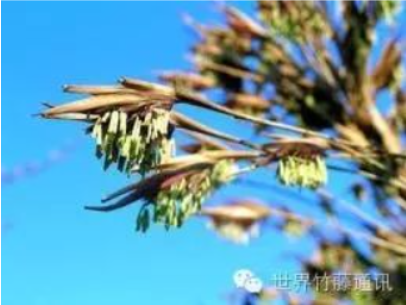
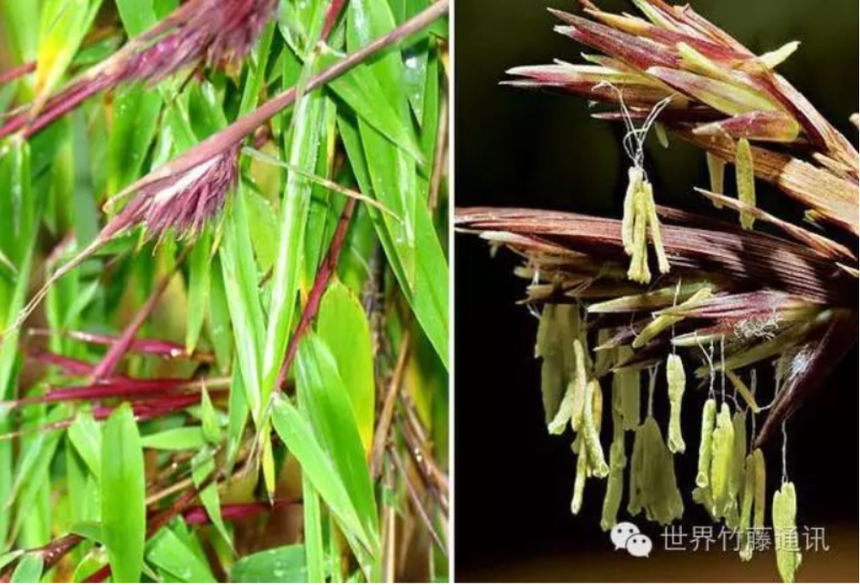
In the 1980s, bamboo flowering was a big news. The phrase 'bamboo blooms, hello!' has left countless people who love giant pandas feeling sad. At that time, the bamboo forests in Sichuan, Gansu and other places bloomed extensively, and then died in large patches. The scale of this caused famine among the local wild pandas. Unlike the stunning display of peonies that move the capital during the blooming season, the flowering of bamboo, although also a news story with a vibrating effect, often carries a sense of disaster. Generally speaking, bamboo only blooms once in its lifetime, and after flowering, it bears seeds, and the plant immediately dies. The problem is that once bamboo blooms, it often grows in clusters, and even the bamboo sea within a radius of hundreds of square kilometers declines together, with both the elderly and the young falling into the sky - whether it is old bamboo that has grown for many years or new bamboo that has only been one or two years old, they cannot escape death. This characteristic often causes great trouble. In addition to the cute pandas going hungry, it also hits the bamboo industry hard. For example, India's bamboo paper industry suffered heavy losses due to the blooming of large bamboo plants and remained stagnant for a considerable period of time. For people who rely on the bamboo sea for their livelihood, the flowering of bamboo is a disaster for them, and its risks are quite similar to farmers experiencing a hundred years of natural disasters and crop failure. Therefore, mastering the secret of bamboo flowering is particularly important. In the scientific community, the flowering of bamboo is known as a "mysterious event in the plant kingdom", attracting the attention of many researchers. Although some bamboo species have a 60 year cycle law, which states that they bloom every 60 years, this law is highly inaccurate. The flowering period of bamboo has a strange and unpredictable temperament. In 2012, the Kunming Institute of Botany, Chinese Academy of Sciences, released the whole genome map of Dendrocalamus latiflorus. It is speculated that there are as many as 290 genes related to flowering. The whole flowering process seems to be a mysterious chain, which is difficult to interpret like a celestial book. Of course, generally speaking, environmental factors are one of the catalysts that affect the flowering of bamboo, such as strong sunlight, dry air, nutrient deficiencies, or the outbreak of sunspots. However, these factors have yet to be accurately verified. The only thing that can be confirmed is that bamboo flowering is not solely influenced by environmental factors. For example, in 1907, the golden bamboo of China, Japan, and the United Kingdom, which were located in vastly different environments across the ocean, bloomed simultaneously; In 1959, the May bamboo of China, Japan, the United States, and the Soviet Union also bloomed simultaneously. What is secretly manipulating the rise and fall of the bamboo sea? The story of "a bamboo whip" circulating in the bamboo research community seems to provide some clues.
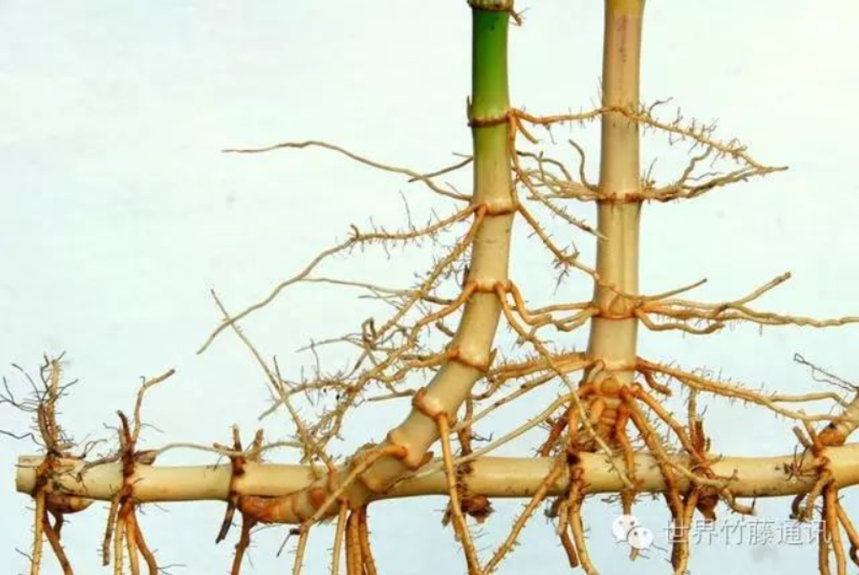
Bamboo whips, also known as the underground stems of bamboo, not only store and provide a large amount of nutrients for rapidly growing bamboo forests, but also serve as the core force for expanding the territory of bamboo forests. They can grow and elongate randomly in all directions, with each growth point having a very hard and sharp cone-shaped bamboo shoot tip. Its penetrating power is extremely strong, and it can penetrate almost any hard and dense soil, even through cracks in rocks, brick walls, cement, or obstacles to form a jumping whip and continue to grow. In 1910, a plant hunter introduced a Shennong arrow bamboo from Shennongjia, Hubei, China to Europe, and later someone introduced the descendants of this bamboo to the United States. More than half a century later, the Shennong bamboo in Europe and the United States bloomed one after another at some point. What's even more interesting is that shortly after the bamboo "relatives" in Europe and America bloomed and withered, as if there was a deep emotional connection, the bundle of Shennong arrow bamboo that introduced bamboo species in Shennongjia also bloomed and died. If we delve deeper, we will find that there are far more than one bamboo flowering event with mysterious "emotional" colors like this. Therefore, some researchers believe that bamboo whips contain important reasons for the rise and fall of bamboo, and some mysterious information is quietly spread through the hidden underground world of bamboo. Like other higher plants, bamboo can only reproduce the next generation through flowering and fruiting. Although the spreading bamboo whip can also grow new bamboo shoots and poles, strictly speaking, it cannot be considered the "next generation", but is more similar to the nails and hair that humans constantly grow and develop. In this sense, for large areas of naturally reproduced bamboo seas, they are a whole connected by underground bamboo whips. Regardless of whether the bamboo on the ground is always young, the age of the underground stems (bamboo whips) is often the same, known as "same age bamboo". Bamboo with this identity may bloom simultaneously under suitable conditions. One phenomenon that can serve as evidence is that in areas with frequent human activities, there are significant differences in the introduction methods and sources of bamboo species due to interference from human activities, which can easily lead to the formation of "different age bamboo". Even if the species are the same and grow together, there is often no large-scale simultaneous flowering. For many people, bamboo flowering is a disaster, but there are still some people who eagerly hope for bamboo flowering, and they are researchers in bamboo science. These people work hard and constantly explore in the laboratory, just to make bamboo bloom mysterious flowers as soon as possible. This is because for bamboo itself, flowering and seed setting are important means of self-renewal, and in order to crossbreed, bamboo must be allowed to bloom. However, this work cannot be carried out in natural bamboo forests because the flowering cycle of bamboo is too long and elusive. Generally speaking, the flowering period of bamboo, such as bamboo, is 60 years, while the flowering period of bamboo, purple bamboo, and cold arrow bamboo is slightly shorter, but it can also take 40-50 years. If bamboo hybridization experiments are conducted under natural conditions, theoretically, a person can only complete them once in their lifetime, which undoubtedly greatly restricts the progress of breeding. In 1985, scientists from Delhi University in India made bamboo flowers bloom in test tubes. Over the next 20 years, scientists from China, the United States, Japan, and India have already made more than 10 types of bamboo flowers bloom in test tubes. These touching bamboo "new flower events" have brought more possibilities for humans to constantly explore the secrets of bamboo and tap into its wealth potential. (Translated from Guokr.com) |